


Third Time Isn't Always a Charm: Why Iskolar ng Bayan Continues to Oppose the NPU Bill?

Despite having been vetoed twice under different administrations, lawmakers once again filed the National Polytechnic University (NPU) Bill last June 2, with what proponents described as "improved" provisions, intended to address President Bongbong Marcos' reasons for vetoing the bill last year.

Last June 2, the House Committee on Higher and Technical Education (CHTE) passed the two new versions of the NPU Bill, namely House Bill (HB) No. 6266, which aims to repeal Presidential Decree (PD) 1341, or known as the PUP Charter, and HB 6870, which declares the national polytechnic university status. Reflected in these versions are promises for enhanced fiscal and institutional autonomy, personnel welfare and job security, and stronger academic frameworks.
Proposed by Former House Speaker Ferdinand Martin Romualdez, Representatives Andrew Julian Romualdez, Yedda Marie Romualdez, and CHTE Chair Jude Acidre, HB 6266 states that PUP shall adopt a program designed to equip its stakeholders with employable skills to reinforce their creativity and productivity. Additionally, Section 18 of the bill says that the university shall enjoy academic freedom pursuant to the mandate of Article XIV, Section 5 (5) of the 1987 Philippine Constitution.
Meanwhile, Rep. Christopherson “Coco” Yap, as the principal author of HB 6870, seeks to declare and strengthen PUP as the National Polytechnic University to address its long-standing facilities concerns. Moreover, it strives to expand the priority programs offered by the institution and keep up with the fast-paced economy of this country.
A look back at the NPU Bill
During his administration in September 2019, Former President Rodrigo Duterte vetoed the original consolidated Senate Bill (SB) 2124 and HB 9023. FPRRD underscored the need to reassess the performance of PUP and its satellite campuses to elevate its status to a national polytechnic university.
Under the new administration, SB 2669, the second version of the NPU Bill, was filed and passed by the Congress last February 2025. The bill was crafted to address the objectionable provisions that led to FPRRD’s veto of its original version. However, in July of the same year, it was vetoed again by President Marcos because of concerns such as failed assessments and bypassed procedures. Marcos also stated that granting the PUP its fiscal and institutional autonomy could weaken the regulatory oversight of the Commission on Higher Education (CHED) on State Universities and Colleges (SUCs).
Now on its third attempt, HB 6266 was revived in the committee, seeking again to fill the gaps resulting from the presidential veto. Reflecting the results of the consultation conducted with CHED and the Department of Budget and Management (DBM) prior to its filing in November last year, its proponents ensure that this bill aligns with the standards of national education and laws regarding autonomy and oversight of CHED and DBM.
The consultation clarified certain provisions, such as the Board of Regents' (BOR) power and authority over university finances, as well as its control to fix and adjust school fees, including tuition and laboratory fees—but only after due consultation with the concerned sectors. Moreover, the provision on institutional autonomy states that PUP shall be treated with greater flexibility, allowing it to determine its teaching, policies, and programs according to national objectives and priorities. Section 9 of the bill also asserts the need to convene once every three months and to coordinate with CHED.
But let’s set the record straight: Why does the bill that sounds promising continue to be opposed by many Iskolar ng Bayan?
Just like during the proposal of the first two bills, several progressive groups in PUP continue to express their disapproval of the bill. The groups argue that commercialization and privatization are disguised as “nationalization”.
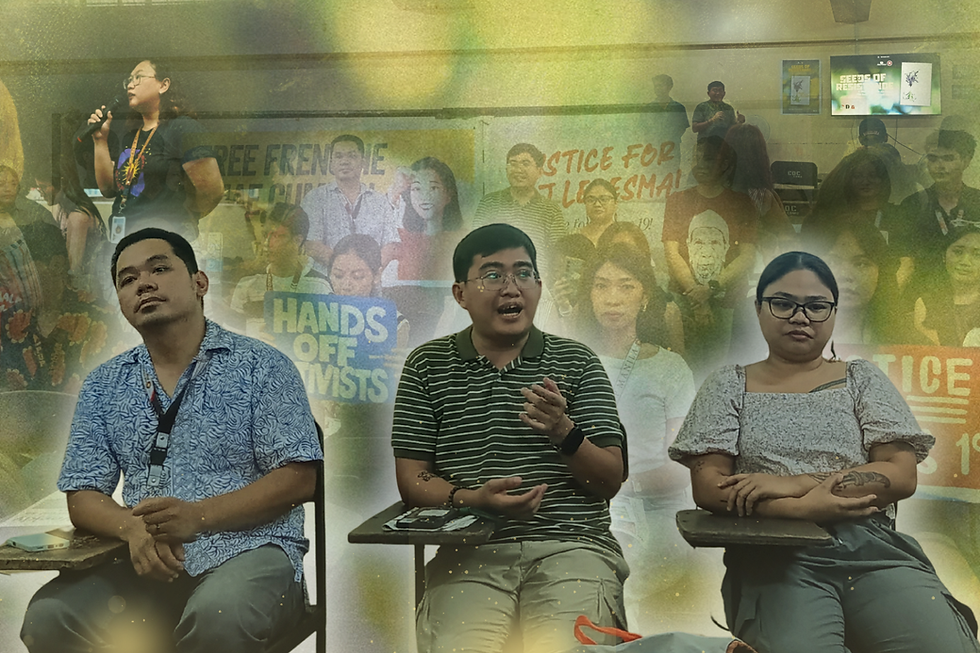
For several years now, since the first filing of the NPU Bill, Iskolars have consistently decried the controversies surrounding the bill in multiple mobilizations, forums, and consultations. The same concerns about commercialization and other impositions were persistently raised at the recent town hall consultation with PUP administrators, faculty, and students last June 19.
A heated conversation was observed as Sentral na Konseho ng Mag-aaral (SKM) President JP Azusano was met by PUP President Manuel Muhi’s questioning remarks.
“Kayo ba, ano ba ang inihain n'yong solusyon? … na alam natin na magbibigay [ng] solusyon tungkol sa problema na kinakaharap at kakaharapin ng PUP?” Muhi stated.
Azusano responded, emphasizing how students are considered one o
f the primary stakeholders of the university.
“Hindi dapat binibigay sa estudyante ang bigat ng pagpopondo para sa pamantasan kasi trabaho ‘yan ng mga namumuno sa ating pamantasan. Simple lang naman, walang paligoy-ligoy na mga provision tulad ng NPU Bill, ibigay nang direkta sa atin ‘yung proposed budget natin,” said Azusano.
Meanwhile, College of Arts and Letters Student Council (CAL SC) President Christian Ancheta faced a strong backlash after questioning the number of students opposing the bill and allegedly taking sides with the administration. Many of his fellow student leaders called him out as his statements did not represent the wider student body, who have been protesting against the bills for years.
On the other hand, Muhi stated that they see this bill as a strong solution for the long-term budget deficit that PUP has been experiencing.
“So, para sa amin, kami sa sektor ng administrasyon, sa sektor ng faculty at ng mga empleyado, ang nakikita naming susi na solusyon dito sa problema natin dito ay ‘yong National Polytechnic University Bill na ito. Pero sinasabi nga kanina na hindi ito ang end-all,” he stated.
Iskolars’ needlessly necessary concerns
Despite the promised budgetary increase, privatization remains a looming threat under the provisions of the NPU Bill, as Section 8 (x) of HB 6266 states that PUP may outsource the management of non-academic services if the university deems it to be advantageous and “enter into joint ventures with businesses and industries, after consultation with the National Economic and Development Authority (NEDA).”
In relation to this, students and critics alike argued that while the NPU Bill did not explicitly impose mandatory tuition or student fees, its provisions on revenue generation and land leasing, among others, could facilitate the gradual commercialization of university operations and create conditions under which additional fees or service costs might eventually be passed on to students.
Martha, a student in the Bachelor of Arts in English Language Studies (ABELS), says that the promise of “no mandatory fees” is untrustworthy when private companies start to enter the university: "If it's going to be more commercialized... kahit sabihin man nila na hindi naman daw magkakaroon ng mandatory tuition or student fees, you don't know that? Kasi nga, when things start to become more business-like, they're eventually gonna start having hidden fees or pagtaas ng presyo."
These concerns stem from the students’ fears that food services, dormitories, printing services, health services, and campus concessions could eventually become more costly if managed through private partnerships and commercial arrangements.
"PUP is built around the small businesses… from printing shops malapit sa Pasig River tapos ‘yong mga stalls mismo sa lagoon, I feel like kawawa naman sila and kawawa rin kami. Sino bang mananalo sa sitwasyon na 'to kundi yung mga private [companies], 'di ba?" she added.
Among the concerns tackled at the consultations, the prominent argument was that the bill compromises the government's commitment to adequately fund public higher education as it shifts the burden of financing from the state to the university itself.
Student groups and critics maintain that instead of guaranteeing long-term increases in appropriations, the NPU Bill encouraged PUP to seek alternative funding sources, potentially leading to commercialization and greater dependence on private entities. They argue that this approach contradicts the constitutional responsibility of the Philippine government to prioritize accessible and publicly funded education, effectively normalizing the underfunding of state universities and colleges.
Azusano noted that the NPU Bill is not the solution for the budget deficit of the university: “Approve the budget… if our government is decisive enough to give the proposed budget of our university, that's the only solution.”
Through the lens of those in power
President Muhi, PUP Chief Legal Counsel Atty. Joanna Marie A. Liao, and the Executive Committee, yet again, directly addressed these matters at the town hall consultation.
They promptly denied allegations of commercialization and privatization of the university. They clarified that the bill merely allows the outsourcing of non-academic services and joint ventures, ensuring that these are safeguarded by NEDA or the Department of Economy, Planning, and Development (DEPDev) and that they undergo rigorous scrutiny and approval in accordance with national government standards, while also guaranteeing public consultations.
The administration also firmly assures the community that tuition will not increase. Officials guarantee that free tuition for the Iskolars remains strictly protected under Republic Act (RA) No. 10931 or the Universal Access to Quality Tertiary Education Act. Furthermore, any future adjustments to university fees require formal consultation with the Board of Regents (BOR), which includes duly elected student representatives.
At the end of the town hall consultation, Muhi stands by his decision that the NPU Bill is the key solution for the most crucial problem of PUP at the moment.
“Marami pa rin tayong kakaharapin [na] problema, pero kagyat itong solusyon… ito ‘yong pinakasusi na nakikita namin doon sa lahat ng problema ng tungkol sa empleyado, tungkol doon sa mga faculty natin, at iba pang mga pangangailangan natin sa unibersidad… Hindi namin kayo kinukontra na manawagan kayo ng dagdag na budget.”
Does the average Iskolar benefit from it?
The underlying impositions of the NPU Bill on the lives of PUPians extend beyond its formal legal provisions.
Critics of the bill argue that it could facilitate a gradual shift from state-funded public education toward market-oriented institutional practices through expanded revenue generation, commercialization of campus services, and increased reliance on private partnerships.
Kabataan Partylist Representative Renee Louise Co previously stated that “such bill would only be a tool of commercialization and privatization of public universities, such as the Polytechnic University of the Philippines.” She branded the bill as “Neglect and Privatization of Universities Bill” and echoed the concerns of every Iskolar.
“Instead of forcing PUP to meet arbitrary qualifications for national university status, Marcos Jr. should guarantee adequate funding and the right to education for every student, regardless of their school's status or classification,” Co stated.
These criticisms underscore the concern that the NPU Bill could shift PUP away from its public service mission by fostering market-oriented policies and corporate developments that may disproportionately affect working-class students, alter university governance structures, and challenge the historical identity of PUP as the "People's University."
Article: Jairo Mendoza and Mary Joy Laurel
Graphics: Keren Hope De Leon

Comments