


Outlived the Bullets, Wounded by the Years

Mary Jane Veloso was given a date to die. No firing squad pulled the trigger; time itself did the killing.
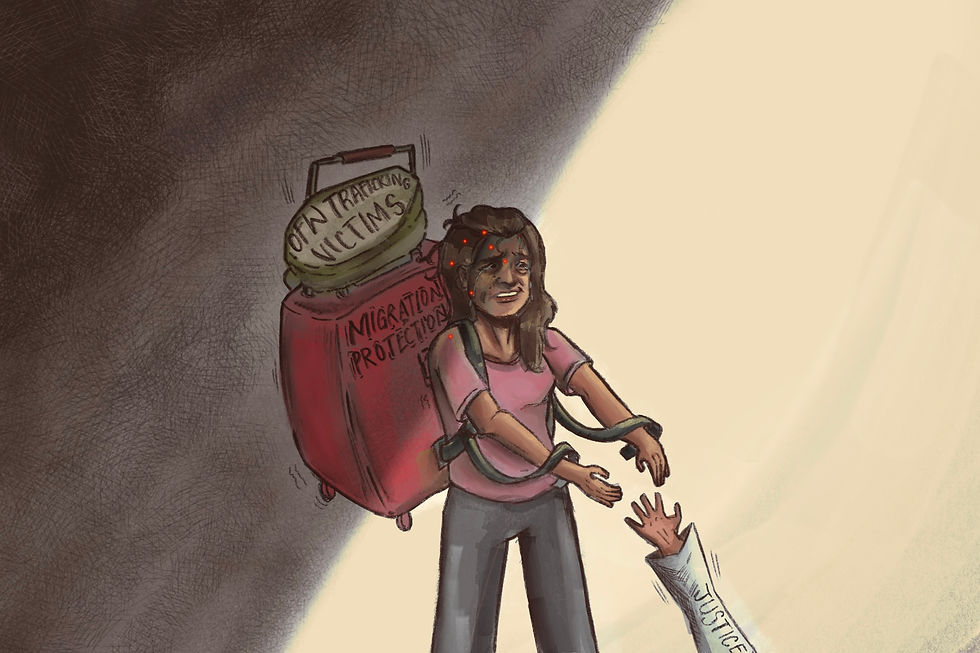
In 2015, Veloso was scheduled to face a firing squad in Indonesia when, just hours before her execution, it was indefinitely reprieved. She had been sentenced to death after authorities found 2.6 kilograms of heroin in her luggage, a conviction she has maintained was the result of being deceived by recruiters. The bullets never reached her. The years did—in a different form. Five became ten. Ten became sixteen. Then, on September 24, President Ferdinand Marcos Jr. signed the absolute pardon that finally set her free.
Yes, we should call this freedom. But we should also be honest about what freedom cannot repair. A pardon can end the punishment and its legal consequences; but it cannot erase sixteen years of imprisonment, uncertainty, and separation from her family. Her sons were children when she left for Indonesia. They will not become children again because their mother has finally walked out of prison. What do we call justice when the bullets were spared, but the years were not?
That distinction is the real question raised by Veloso’s release. The pardon is an exercise of the President’s constitutional clemency power; its existence, however, does not by itself answer the questions raised by the years Veloso spent imprisoned. The more difficult question is what happens when relief arrives only after years of legal and diplomatic struggle have already consumed a person’s life. Veloso’s return to Philippine custody in December 2024 was itself the product of negotiations with Indonesia; her death sentence had been reduced to life imprisonment before she was transferred to the Philippines. The Marcos administration can therefore point to something concrete: it helped bring a woman home who had spent years imprisoned abroad and facing the possibility of execution.
But bringing someone home and restoring what was lost are not the same achievement. That is where celebration must become scrutiny.
Veloso remained in Philippine custody for roughly one year and nine months before Marcos granted her an absolute pardon. Migrante International has argued that her continued detention lacked sufficient legal basis because she had no Philippine criminal charge, while the National Union of Peoples’ Lawyers has questioned the legal basis for continuing to enforce the foreign sentence after her transfer. Those are positions advanced by advocacy and legal groups, not judicial findings that her detention was unlawful. But their questions expose the unresolved problem beneath the celebration: once she was already home, what explains why relief still took so much longer? If clemency could ultimately end her imprisonment on humanitarian grounds, why did relief have to remain out of reach for so much longer?
That is not an argument against the pardon. It is an argument against treating the pardon as the end of the argument.
Mary Jane was the one carrying the suitcase. But the circumstances behind it belonged to far more than one woman. Philippine Supreme Court records show that she traveled to Indonesia after being promised work abroad by Maria Cristina Sergio and Julius Lacanilao, who were subsequently charged with qualified trafficking, illegal recruitment and estafa in the Philippines. In a separate case involving other victims, Sergio and Lacanilao were convicted in 2020 of large-scale illegal recruitment and sentenced to life imprisonment. That conviction does not, by itself, establish every allegation surrounding Veloso’s Indonesian case. It does, however, make one uncomfortable fact impossible to ignore: people linked to the recruitment circumstances that brought Veloso abroad were themselves found criminally liable for exploiting other jobseekers. The suitcase crossed a border in 2010. The consequences of the recruitment behind it crossed borders, governments, and generations.
That border-crossing reality is not confined to one woman. The Philippine Statistics Authority estimated 2.19 million overseas Filipino workers in 2024, 57.2 percent of them are women. That is not a count of trafficking victims, nor does it suggest that millions of OFWs face circumstances like Veloso’s. It does show the scale of the population whose safety abroad depends on recruitment, regulation, and protection systems functioning before a crisis becomes a case.
And there are evidence that those systems still struggle to see the people they are supposed to protect. The U.S. State Department’s 2024 Trafficking in Persons Report said Philippine authorities identified 890 trafficking victims during the reporting period, including 345 victims of labor trafficking. It also said the government lacked a reliable mechanism for consolidating total victim-identification statistics. That caveat matters: 890 is not the size of the problem. It is the number the system was able to identify and record.
This is where the lesson of Veloso’s case becomes larger than herself. A state cannot measure migrant protection only by what it does after a worker has already been exploited, arrested, or sentenced. Prevention is less visible than rescue. It produces no dramatic airport arrival, no presidential announcement, and no photograph of a family reunited after years apart. Yet that is precisely why it matters. Effective protection should help ensure that a desperate jobseeker does not have to become a death-row prisoner before the state recognizes that she needed protection.
The government is acting, but the existence of enforcement does not mean the system is doing enough to prevent exploitation before it happens. The same 2024 trafficking report said Philippine authorities investigated 417 trafficking cases, prosecuted 264 alleged traffickers, and obtained 80 convictions. Those numbers matter: they show that cases are being pursued and traffickers are being held accountable. But enforcement after exploitation and protection before exploitation are not interchangeable. A system can prosecute traffickers and still leave workers vulnerable to the conditions that make trafficking possible. For a worker leaving home because staying there cannot provide enough, desperation can become the currency traffickers know exactly how to spend. That makes credible recruitment, accessible information, effective screening, accountability for illegal recruiters, and meaningful assistance abroad more than policy checkboxes. They are the difference between responding to exploitation after it happens and making exploitation harder to happen in the first place.
Perhaps the most dangerous thing we can do now is confuse mercy with justice.
Mercy can open a prison door; justice asks why the person had to spend so many years behind it. Mercy can come through a presidential signature; justice demands institutions that do not require extraordinary intervention before a vulnerable citizen can finally receive protection. Mercy can give a family its mother back; justice asks who will answer for the years that family lost.
The distinction is not philosophical. It is the difference between celebrating an ending and examining everything that made the ending necessary. Mary Jane Veloso has received relief that can change what happens next. No government order, however consequential, can change what happened before. Magna Carta’s Clause 40 articulated a related principle centuries ago: justice should not be sold, denied, or delayed. William Penn later carried the same principle into another political and legal context, explicitly treating delay itself as an injustice. The language is old. The question it raises for Veloso is not.
Let her go home. Let her see her sons without a prison wall between them. Let her rebuild whatever sixteen years left standing.
But let the country remember what her freedom required.
We should not need another Filipino on death row to remember that the people we send abroad for work are still ours to protect. We should not need sixteen years, an international outcry and a countdown to death before protection becomes urgent. If a Filipino worker must first become a national controversy before the machinery of the state moves with exceptional force, then the failure is not hers to carry home.
The pardon should close Mary Jane Veloso’s prison sentence. It should not close the case that her life has forced the country to confront.
Because the true measure of what we learned from Mary Jane is not whether we celebrated when she finally came home. It is whether the next desperate jobseeker ever has to become another Mary Jane for us to care about.
Article: Ariane Claire Galpao
Illustration: Bea Bianca Rivero



Comments