


AI as Therapists: The Vast Opportunities and Risks of Artificial Intelligence in the Field of Psychology

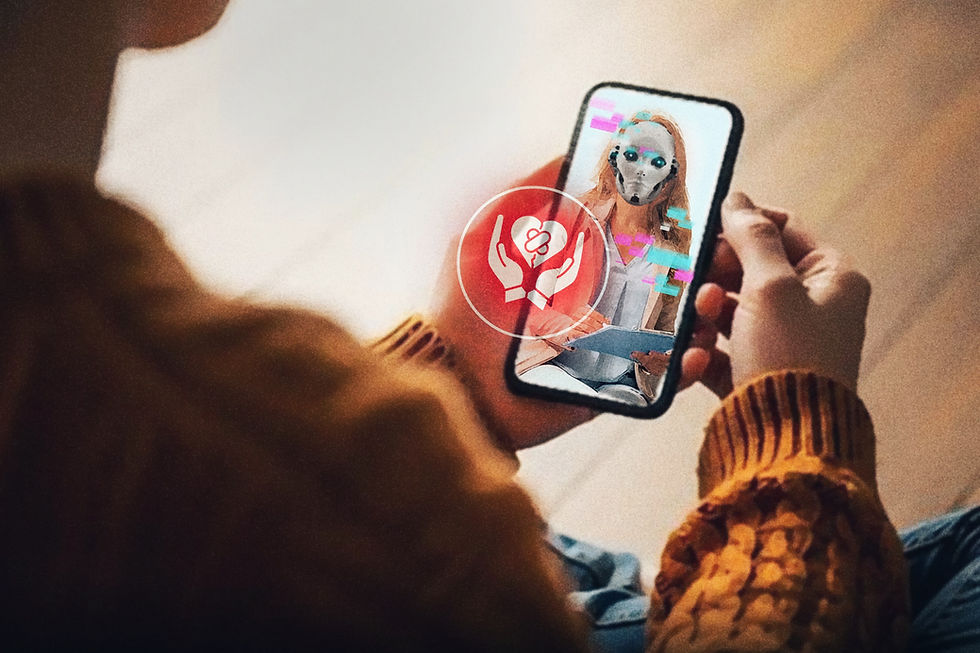
With the rise of artificial intelligence (AI) integrated into various aspects of our society, the use of generative AI for health and wellness assistance, particularly for mental health needs, continues to gain popularity. Many people are drawn to these technologies because they provide immediate responses, accessibility, and a sense of privacy that traditional support systems may not always offer.
On September 30, Rappler PH organized a live community chat room where experts and the Rappler community discussed the growing use of AI for emotional support, including its benefits, limitations, and ethical concerns in mental health applications.
During the discussion, AI expert Don Masakayan explained that people’s reliance on generative chatbots is driven not only by choice but also by limited access to professional mental health services.
“A lot of people lean fully on AI because they’ve never actually experienced what professional help feels like. And that’s not necessarily a reflection of choice — it’s a reflection of access. Therapy is expensive, hard to schedule, and often intimidating to approach, while ChatGPT is always available at the click of a button,” Masakayan said.
While these technologies are often treated as cheaper, more accessible alternatives to professional therapies, experts warn that over-reliance on AI for emotional support and comfort blurs the line between physical interactions and technologically mediated emotional support.
Jem Austria, a psychology master’s student, also shared on the chat room that balancing the use of AI with activities such as exercise, journaling, and other hobbies will help in setting the limit on usage and make space for real-life connections, such as talking to your friends and family.
AI could also facilitate users’ ability to self-reflect, express emotion through writing or journaling, and eventually help in developing a deeper understanding of themselves.
Despite concerns about overdependence, experts also acknowledge that AI and other generative chatbots may still provide certain benefits when used responsibly and with proper limitations.
Some mental wellness applications are designed to track emotional patterns, monitor mood changes, and provide coping mechanisms for anxiety or burnout. Through continuous interaction, users may gain an increasing level of insight into their mindsets, behaviors, and emotions.
Meanwhile, evidence from the International Journal of Human-Computer Studies suggests that while many people perceive and use AI as a suitable forum for expressing their feelings—particularly during periods of stress, anxiety, or loneliness—there are also indications that people are becoming increasingly concerned about emotional dependence on AI and the potential to replace traditional mental health services with AI-based solutions.
The American Psychological Association (APA) also supports these claims, stating in its report that there is insufficient scientific proof and regulation of AI wellness applications and chatbots to guarantee user safety.
“AI wellness apps and chatbots currently lack the scientific evidence and the necessary regulations to ensure users’ safety,” the American Psychological Association (APA) stated in its report on the growing use of artificial intelligence for mental health support.
The association further warned that although AI tools may seem beneficial and have emotional connections, they must not be used as a replacement for licensed mental health practitioners, particularly in cases of severe emotional distress or emergencies.
Privacy also presents a serious issue, particularly when users begin to disclose their personal data to the platform. According to researchers and advocates for mental health treatment, when people provide sensitive, personal information to the AI system they use, this data can be collected, stored, or misapplied.
Mental health professionals and experts have also expressed concern that developing emotional dependence on AI is an issue, especially for those who have come to rely on it as a source of comfort and emotional validation.
As the use of AI for emotional and mental support continues to grow, experts emphasize the need to develop clearer ethical standards and stronger regulations for AI wellness platforms.
Mental health professionals continue to encourage the public to view AI as a supplementary tool rather than a replacement for professional psychological care and human connection.
This Mental Health Awareness Month, researchers and advocates emphasize that while AI may provide convenience, accessibility, and temporary emotional support, responsible usage and proper guidance remain essential in protecting users’ mental well-being.
Article: Raven Gabriel Cruz
Graphics: Jan Mike Cabangin


Comments