


Beyond the Bleachers: The Untold Struggles of Student-Athletes

Loud crowds, the adrenaline of the players, the thrill of the game, the hard-fought victories, and the shining trophies—these are the typical scenes in the lives of student-athletes, or at least the ones that people see during intramurals, tournaments, and competitions.
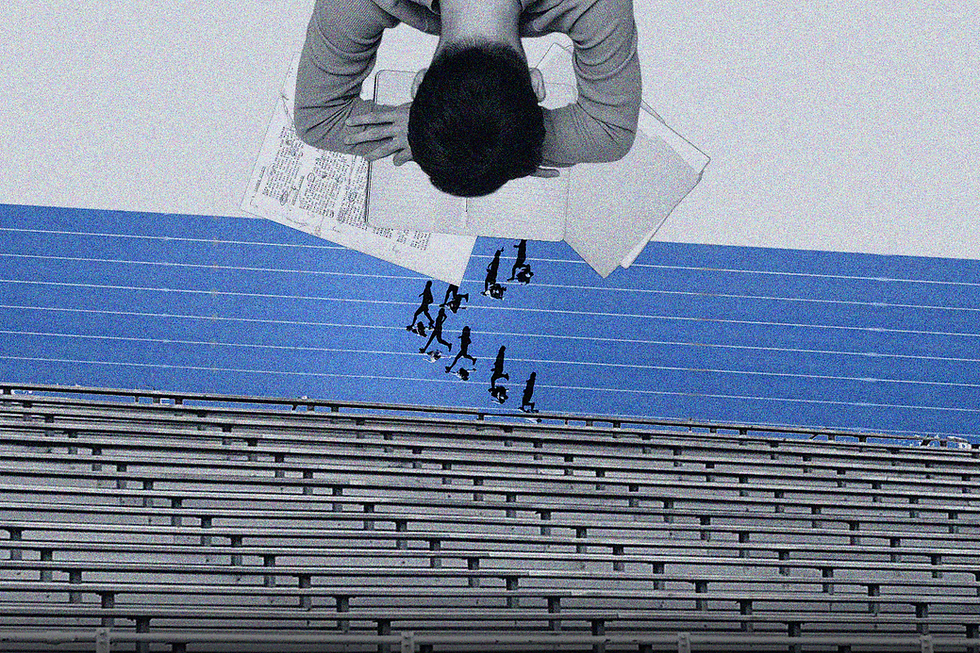
But beyond the cheers are parts that no audience witnesses. Once the game ends and the crowd leaves, they return to a life most people overlook: missing classes because of tournaments, squeezing schoolwork between training sessions, and dealing with the pressure and expectations of others.
This is the side of the story not seen from the bleachers, the quiet strength of students living two lives at once. They compete for the school, and at the same time, compete with deadlines. Often, their toughest opponent is exhaustion itself, to the point where choosing between rest and studying becomes a tough battle.
Yet somehow, they keep going, fueled by that thing called passion, moving forward even when their bodies beg them to stop.
Behind every winning moment is a student trying to pass a quiz. And behind every athlete is a story that never makes it to the court.
Where the real challenge starts
For Maan Basas, a third-year Broadcasting student and a tennis player for the PUP Radicals, her day usually starts at 8:00 AM, with classes lasting until noon. By 1 PM, while most students head out to eat or hang out after class, Basas’ destination is the tennis court.
From noon until the sun sets, her world would revolve around training, running laps, and practicing her swing, leaving her with little to no time to check her phone. But even after ending practice and arriving home, her day is still far from over.
“Usually, nagsisimula talaga ako mag-aral mga 10 PM na, or 10:30 PM. Tapos, onwards na yun hanggang sa may matapos man lang ako, isa o dalawang agenda kasi para maging productive rin ako and progressive yung acads ko,” Basas said, expressing that she doesn’t want to just fulfill her responsibilities as an athlete but also as a student.
Balancing two responsibilities is no easy task. When classes and trainings overlap, Basas tries her best to fill both roles. Sometimes, she would put her training sessions on hold to participate in important academic activities, such as recitations. Other times, she would leave her phone on to attend online classes during practice.
Some days, student-athletes can push through, but other days, it becomes too much.
“Minsan hindi ko na rin nagagawa talaga or wala na talaga ako nagagawa all throughout the day. Instead, nagbe-breakdown na lang ako kasi mahirap sa akin, nagiging indecisive ako kapag pagod kasi ako,” Basas said. After a long day, she faces the heavy weight of exhaustion and the guilt of unfinished tasks.
Often, in striving to manage their student-athlete life, they end up sacrificing something in the process, such as time for classes, rest, and their own well-being.
Basas added, “Parang nare-realize ko, habang tumatanda ako na hindi ko hawak yung oras ko. And parang vice versa siya. Na parang iba pang tao yung humahawak ng oras ko.”
Off-court battles
The challenges Basas faces aren’t isolated, as for many student-athletes, the pressure continues long after the crowd disappears.
For Jeptah Pausal, a third-year Advertising and Public Relations student and captain of the COC Volleyball Team, the hardest battles don’t always happen during games. They unfold in the quiet moments after training, while processing documents across campus, or during late nights when burnout creeps in quietly.
She has been balancing sports and academics since high school, and even now, she still tries to give both the time they deserve. But the truth stays the same: no matter how much she loves the sport, academics will always come first.
“Pinaka-challenge talaga ‘yung i-manage pareho lalo na kapag may lakad ng papers at sabay may training,” she shared. And when everything becomes too overwhelming, she turns to journaling, running, or binge-watching shows—small ways to detach and recharge from something that drains both her body and mind.
Despite it all, she continues to show up. She leads her team, commits to training, and still plays with joy. What keeps her going, she said, are the people who believe in her. “Family, friends, teammates, sila talaga ‘yung nagpapabalik sa ’kin sa court.”
But behind the passion is a reality that student-athletes often hesitate to admit: support from the institution is something they rarely feel. “Sa school and college hindi masyado,” she said.
She also shared that the team organizes their own training, often lacking proper facilities, and frequently relies on the Student Council for excuse letters and coordination with professors. Considerations from teachers help, but most of the emotional and mental support comes from teammates themselves, the ones who understand the grind because they live it too.
This, Pausal believes, is why support from everyone matters. “Physically and emotionally draining na siya,” she said. “Pag-uwi, gusto ko sana may masasandalan… ‘yung pwede kong sabihan ng frustrations nang walang judgment.” For her, a solid support system is just as important to an athlete’s well-being as physical training is.
She wishes more people understood that being a student-athlete is more than just playing. “Una sa lahat, student pa rin kami,” she said. The stereotype that athletes only know how to play misses the quiet discipline behind the scenes: the time management, the deadlines squeezed into impossible gaps, the sacrifices that aren’t seen from the bleachers.
“Marami kaming pinagtatrabahuhan sa sarili namin na dapat ma-appreciate ng ibang tao, not just yung pagiging atleta,” she added.
Behind every medal, every loud crowd, and every school banner are students like Basas and Pausal, constantly negotiating their time, energy, and even their well-being just to keep going. Most of their real wins occur away from the spotlight, whether it’s completing a requirement on time, getting through a tough week, or simply finding enough energy to attend both class and training.
They navigate two demanding worlds with a kind of patience that isn’t always visible to others. And in the end, their story isn’t about being strong all the time but learning how to carry the weight of both roles in ways that feel true to them, even on days when no one else is watching.
Article: Mikaelah Bianca Panopio and Kriza Marielle Sumang
Graphics: Kent Bicol

Comments