


Band-Aids for Broken Schools

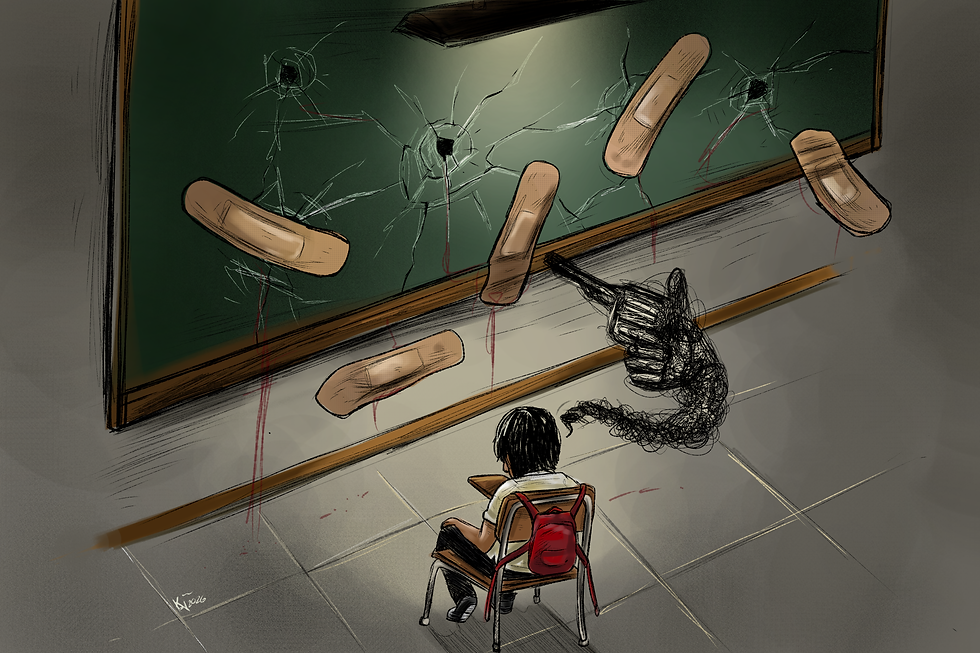
Every week seems to bring another story of violence inside or around our schools. A stabbing, a bomb threat, a weapon confiscated from a student, an online threat, and, most tragically, shootings in Tacloban, Zamboanga, and now Banga, South Cotabato have become part of an increasingly disturbing picture.
Each incident is different. Their circumstances, motives, methods, and perpetrators cannot simply be collapsed into one explanation. Yet their recurrence exposes a common institutional problem: schools are being forced to confront forms of violence that their existing systems were not necessarily designed to prevent. The answer cannot be a single policy either, because the causes are too varied for one measure to cover them all. Each case, therefore, demands its own facts and explanation. Treating every incident as the product of a single cause would be as dangerous as dismissing them as unrelated, because both approaches allow institutions to avoid asking which vulnerabilities are actually producing risk and which interventions can address them.
A July 9 Senate hearing recorded 15 school-related violent incidents between June 16 and July 6, involving stabbings, bomb threats, and shootings. The figure becomes more disturbing beside the Tacloban shooting, where three students were killed and 20 others injured. From a Grade 8 student attacking Grade 5 pupils with a kitchen knife to weapons being confiscated from students in Cagayan, the methods differ, but the challenge is the same: how does a school prevent violence before it reaches the classroom?
The government's immediate answer has been security. Schools have tightened bag inspections, considered or expanded metal detectors and security audits, mobilized police support, and discussed active-shooter and emergency-response drills. These measures are necessary because schools still need a first line of defense against immediate physical threats.
The logic behind these measures is straightforward: prevention and rapid response can limit the damage when a threat emerges. A weapon that is detected before it reaches a classroom can prevent an attack, while trained personnel can reduce casualties when prevention fails. Following the Tacloban shooting, for example, police units in Northern Mindanao increased school deployments and reminded personnel to secure their service firearms from unauthorized access.
But security addresses the final stage of the problem. A metal detector can find a weapon; it cannot explain why a student decided to bring one.
That distinction has become harder to ignore with the shooting at Banga National High School in South Cotabato on September 18. DepEd had already intensified school-safety measures, including security protocols, police coordination, and nationwide safety drills launched earlier in the month. This does not establish that those measures were ineffective, nor is it yet possible to determine from the Banga incident alone how existing safeguards operated or failed. It does, however, expose the limit of measuring school safety solely by the number of security measures deployed.
DepEd Undersecretary Malcolm Garma has warned about copycat behavior, while DepEd has acknowledged that intention, motivation, and influence cannot simply be eliminated through tighter school security. This distinction matters because violence does not necessarily begin at the school gate. It can develop through personal conflict, bullying, exposure to violent influences, social isolation, or other circumstances that require separate forms of intervention. These factors should not automatically be treated as causes of violence; rather, they are conditions that institutions may need to identify and address before they develop into a crisis.
The digital world makes that boundary even harder to maintain. During a Senate inquiry on July 1, Senator Risa Hontiveros raised the possibility that the Tacloban shooting was influenced by the online extremist network known as 764, emphasizing that these were leads requiring verification rather than final conclusions. Subsequent findings strengthened that line of inquiry: CICC Undersecretary Renato Paraiso later told BusinessMirror that authorities had recovered chat logs which, according to the CICC, showed that the two teenage suspects were members of 764 and had been deliberately groomed by the network.
This does not mean that every violent game, website, or online community produces violent behavior; nor should every incident be reduced to whatever appears on a student's screen. Instead, the investigation demonstrates why school safety cannot be understood purely as a physical-security problem. A child can encounter harmful influences without ever carrying anything through a school gate, and institutions designed only to secure the gate will inevitably miss part of the threat.
That makes prevention broader than policing. DepEd's move to accelerate the hiring of guidance counselor associates following the Tacloban shooting points toward an important distinction: by the time a student brings a weapon into school, prevention has already reached its final line of defense. Guidance services, early intervention, digital awareness, and mechanisms for recognizing distress are not substitutes for security; they are what make security more than an emergency response.
The same principle applies to firearms. In the Tacloban shooting, one of the weapons used by the minors was a police service firearm taken from a relative, with investigations leading to negligence charges against the officer who allegedly failed to secure it properly. Following the Zamboanga school shooting in August, the PNP again reminded personnel to secure service firearms from children and unauthorized persons. These incidents raise a question beyond the person who pulled the trigger: how did minors gain access to firearms that should have been secured from them? Accountability must therefore examine not only the perpetrator, but whether safeguards were followed and enforcement is strong enough to prevent unauthorized access.
School safety also has a material foundation. The government can point to rising education spending, from ₱1.055 trillion in the 2025 General Appropriations Act to ₱1.345 trillion in the enacted 2026 budget, with the proposed 2027 budget allocating another ₱1.326 trillion to basic and higher education, including ₱975.96 billion for DepEd. Yet a larger budget does not automatically translate into capacity inside every classroom. Despite funding for nearly 25,000 classrooms and thousands of teaching and non-teaching positions in 2026, alongside provisions to fill 64,530 authorized teaching positions in the proposed 2027 budget, staffing, infrastructure, and support-service gaps persist.
The question, then, is not simply how much is spent, but how much reaches the institutional functions that keep students safe. A school cannot be expected to become a fortress while struggling to function as a school.
These problems are often discussed separately—school security, mental health, online radicalization, firearms, infrastructure, and personnel. In reality, they form different points of the same prevention system. Violence rarely arrives at the school gate fully formed. Its pathway differs from case to case, but the danger lies in allowing grievances, vulnerability, harmful influence, and access to weapons to accumulate until an emergency becomes possible.
That is why the government's response risks becoming a collection of band-aids. After an attack, there is an inspection. After a threat, there is another security measure. After a crisis, there is another drill or memorandum. Each may be justified on its own, yet a government can become increasingly active without becoming increasingly preventive if every response begins only after something has already gone wrong.
The problem is not that security measures are useless. They can save lives. The problem is mistaking containment for prevention.
A band-aid can stop the bleeding, but it cannot repair the wound. Likewise, a metal detector can intercept a weapon without addressing how that weapon became accessible, why a student became vulnerable to harmful influences, or what institutional safeguards failed before the weapon ever reached the school.
A safer school therefore requires more than a stronger gate. It requires institutions capable of identifying risks early, supporting students who need intervention, addressing bullying and other forms of conflict, understanding digital threats, controlling access to weapons, and providing the personnel and resources necessary to perform those functions. Security should be one layer of protection, not the entire architecture of prevention.
If every crisis produces another temporary measure without a deeper examination of the conditions that allowed it to happen, then the country risks confusing activity with progress. We may build stronger gates, add more guards, and conduct more drills, yet still leave the wound underneath untreated.
Students should not have to rely on the strength of the latest security measure to feel safe inside their classrooms. A school is safe not merely when it can survive an attack, but when its institutions are strong enough to make that attack less likely to happen in the first place.
Article: Kyan Miguel San Agustin
Illustration: Kaiser


Comments